











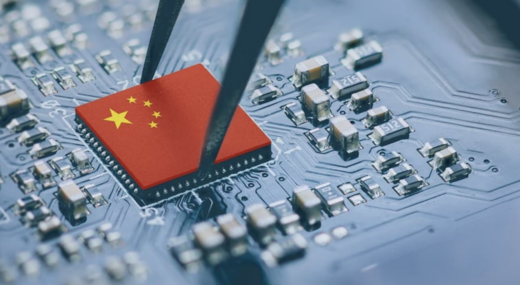
China’s Chip Equipment Push Outpaces Its Own Targets
China’s semiconductor equipment self-sufficiency drive accelerated far faster than expected in 2025, with locally developed tools accounting for 35 percent of the market, up from 25 percent in 2024 and beating Beijing’s 30 percent target. The shift aims to reduce reliance on US suppliers like Applied Materials, Lam Research and KLA. Gains were strongest in etching and thin-film deposition, where domestic adoption exceeded 40 percent, led by firms such as Naura Technology and Advanced Micro-Fabrication Equipment. Advanced Micro-Fabrication’s 5nm etcher entered validation at TSMC, while Naura dominated SMIC’s 28nm lines.
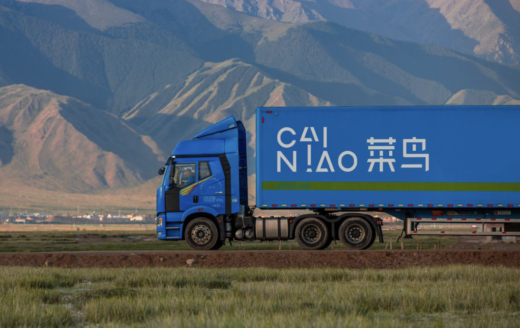
Alibaba’s Cainiao Launches Low-Cost US-Mexico Cross-Border Logistics Service
Cainiao, Alibaba’s logistics arm, is expanding its international reach with a new cross-border parcel service between the US and Mexico, marking its first such initiative in the Americas. The service targets one of the region’s busiest delivery corridors, aiming to reach 99 percent of the Mexican market while offering prices about 60 percent below current averages. Cainiao will manage critical operations—including sorting, line-haul transfer, and last-mile delivery—through self-operated networks in both countries, avoiding outsourcing.
China Dominates Global Humanoid Robot Market in 2025
Shanghai-based AgiBot led global humanoid robot shipments in 2025, capturing nearly 38 percent of the market with 5,168 units, according to Omdia. Chinese firms dominated the top ten, outpacing major US competitors like Tesla. Unitree Robotics of Hangzhou shipped 4,200 units, taking 32 percent market share, while UBTech Robotics in Shenzhen ranked third with 1,000 units. Leju Robotics, Engine AI, and Fourier Intelligence filled fourth through sixth spots. Worldwide shipments surged nearly 480 percent to 13,318 units, and Omdia forecasts 2.6 million units by 2035.
Hacker Erases Neo-Nazi Websites Live on Stage at Chaos Congress
A hacktivist known as Martha Root dramatically wiped three white supremacist websites during a live presentation at Germany’s Chaos Communication Congress. Dressed as the Pink Ranger, Root deleted servers hosting WhiteDate, WhiteChild and WhiteDeal, platforms described as racist dating, fertility and job-matching services. The sites remain offline, and their administrator confirmed the attack online, calling it “cyberterrorism.” Root said they exploited weak security, scraping public user data that included photos with precise geolocation metadata, affecting more than 6,500 users.
AI Boom Sends TSMC’s Quarterly Revenue Soaring Past Expectations
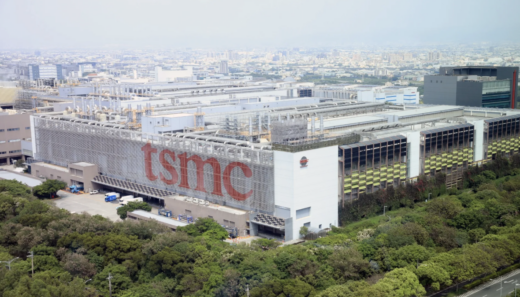
TSMC, the world’s largest contract chipmaker, reported a 20.45 percent year-on-year jump in fourth-quarter revenue, reaching T$1.046 trillion and beating market forecasts. The strong performance reflects surging demand for advanced chips used in artificial intelligence, benefiting major customers such as Nvidia and Apple and offsetting weaker post-pandemic consumer electronics sales. Revenue exceeded analysts’ SmartEstimate of T$1.036 trillion and aligned with the company’s earlier guidance.
Windows 11 Ranked Slowest in Brutal Multi-Generation Speed Test
Despite Microsoft promoting Windows 11 as fast and secure, a new YouTube benchmark suggests it is the slowest Windows version ever tested. TrigrZolt compared Windows XP through Windows 11 on identical Lenovo ThinkPad X220 laptops. Windows 11 finished last in boot speed, battery life, memory usage, app launching, video editing, and basic tasks like opening File Explorer and Paint. It consumed significantly more RAM even while idle, mainly due to background services and telemetry. Although it performed better in file transfers and disk usage, the outdated hardware likely worsened results.

Dell Breaks the AI Hype Cycle at CES 2026
After years of being inundated with shallow, confusing AI marketing, the author is relieved by Dell’s refreshingly restrained CES 2026 pre-briefing, which avoids the usual buzzword overload. Instead of pitching every product as “AI-powered,” Dell focused on tangible hardware updates: the return of XPS laptops, new Alienware ultraslim and entry-level models, refreshed Area-51 desktops, and new monitors. Executives openly admitted that consumers are not buying devices for AI features, even though all new machines include NPUs.