












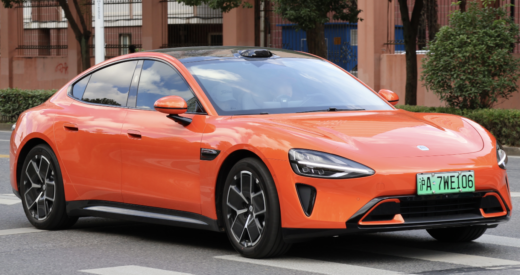
Xiaomi Overtakes Tesla as China’s New Premium EV Champion
China has produced a credible “Tesla killer” as Xiaomi’s electric SU7 outsold Tesla’s Model 3 in 2025, marking a major milestone for the country’s premium EV industry. SU7 deliveries reached 258,164 units, nearly 30% more than the Model 3, whose long-held dominance has faded amid fierce domestic competition. Analysts say Chinese automakers now match Tesla’s technology while undercutting its prices, accelerating their move up the value chain. Despite Tesla’s continued success with the Model Y, its market share in China has fallen sharply.
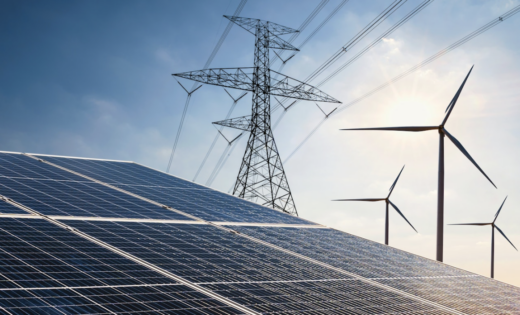
China Builds ‘Green Power Highway’ to Fuel AI and Cut Coal
China has begun construction on the southern section of the Tibet–Guangdong ultra-high-voltage power line, a massive project designed to transmit renewable energy from the Tibetan Plateau to industrial hubs like Guangzhou and Shenzhen. Capable of delivering over 43 billion kilowatt-hours annually—roughly half the output of the Three Gorges Dam—the line aims to cut coal use by 12 million tonnes per year. Scheduled for completion in 2029, the project supports China’s carbon-reduction goals and rising electricity demand from AI data centers.
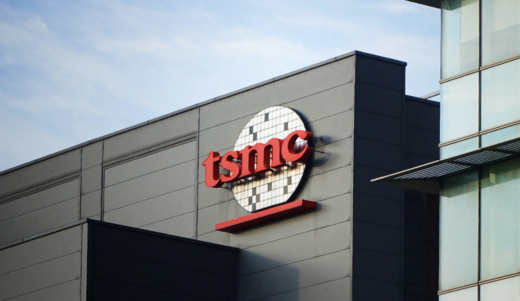
TSMC Struggles to Meet Surging AI Chip Demand
The AI boom is hitting a hard constraint: manufacturing capacity. TSMC, the world’s leading chip foundry, has reportedly told major clients like Nvidia and Broadcom it can’t meet their growing demand. As supply, not demand, becomes the limiting factor, power in the AI chip market is starting to shift. With advanced-node capacity finite and lead times stretching, customers are seeking alternatives rather than slowing spending. This opens the door for Intel’s foundry business as an overflow option, offering available capacity and geopolitical alignment.
CEOs Bet Big on AI—Even as Profits Lag Behind
A new PwC Global CEO Survey reveals a striking gap between AI hype and real-world results. Based on responses from 4,454 CEOs across 95 countries, 56% say AI has delivered no meaningful cost or revenue benefits so far. While some report gains, only 12% have seen both higher revenue and lower costs. PwC argues the issue isn’t AI itself, but weak foundations like poor integration and lack of responsible AI frameworks. Despite limited returns, optimism remains high: nearly three-quarters of CEOs expect AI to boost profits soon. For now, AI adoption appears driven more by fear of falling behind than proven financial success.

Tesla Puts Self-Steering Behind a Paywall with $99 Monthly Fee
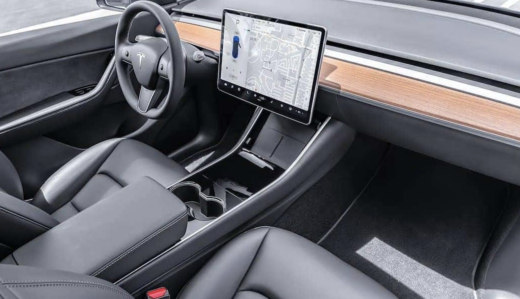
Tesla, is shifting its strategy by making self-steering a subscription service. Starting February 14, new Tesla buyers must pay $99 per month for Full Self-Driving (FSD) to access steering assistance, as the one-time $8,000 purchase option is removed. The move follows mounting legal and regulatory pressure over allegedly deceptive marketing around Autopilot, including a major court loss and a threatened sales suspension in California. As profits tighten and scrutiny grows, Tesla is leaning into recurring revenue.
Wikipedia Turns 25, Still Standing Strong in an AI-Crowded Internet
Wikipedia marked its 25th anniversary on January 15, celebrating a rare success story of the open internet. Founded in 2001 by Jimmy Wales, the nonprofit encyclopedia has grown into the largest in human history, drawing 27 billion page views in December alone while remaining free of ads and trackers. Its open-edit model, once criticized, has made it a cornerstone for research worldwide. Yet challenges loom: political pressure in the US and UK, declining human traffic due to AI tools, and rising bot activity. Even so, Wikipedia endures as a trusted, community-driven knowledge hub—and a reminder of what the internet can still get right.

AI Memory Hunger Sparks a Global Electronics Price Shock
Explosive AI demand is triggering a severe global memory shortage, with up to 70% of all memory produced in 2026 expected to be consumed by data centers. According to the Wall Street Journal, the fallout will hit industries far beyond tech, including cars, TVs, and everyday consumer electronics. Manufacturers are phasing out legacy memory chips, making even basic components scarce and expensive. Experts warn prices could surge as RAM becomes a major share of product costs, echoing Covid-era supply disruptions. Analysts predict declining smartphone and PC sales, calling the shift a long-term reallocation toward AI infrastructure.