











Alibaba’s Qwen jumps to top of China App Store after freebie blitz
Alibaba Group Holding’s AI chatbot Qwen surged to the top of China’s Apple App Store after the company launched a large-scale freebie campaign offering perks such as bubble tea. Within hours of the promotion’s launch on Friday, Qwen climbed from 10th place to overtake Tencent’s Yuanbao. Alibaba said more than 10 million free orders worth about 250 million yuan were placed in just nine hours using capped vouchers, briefly overwhelming stores and disrupting the campaign.

Chinese humanoid robot makers push smarter AI brains toward real-world use
Chinese humanoid robotics companies are accelerating efforts to develop advanced AI “brains” as they move closer to commercial deployment. Shenzhen-based Dobot said it has delivered a third batch of mass-produced, full-size Atom humanoid robots, signalling a shift from lab prototypes to industrial products. Powered by Dobot’s self-developed vision-language-action model, Atom can interpret ambiguous instructions, adapt to real-world uncertainty, and make autonomous decisions beyond preprogrammed tasks. The move follows rival UBTech’s decision to open-source its Thinker multimodal model, designed to reduce lag and spatial errors.
Tesla opens China AI training centre to boost self-driving push
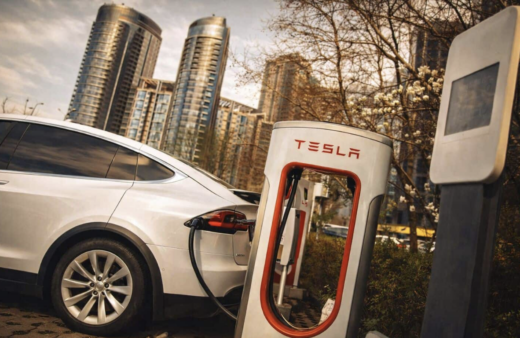
Tesla has started operating a China-focused artificial intelligence training centre to improve its assisted-driving and self-driving capabilities, following Beijing’s easing of AI-related restrictions. The move is a key step toward expanding Tesla’s Full Self-Driving software in the world’s largest electric vehicle market, where local carmakers are rapidly advancing Level 3 autonomous driving. Tesla said the centre has sufficient computing power to support development, though details remain undisclosed. Analysts say intensifying competition will benefit Chinese consumers as thousands of L3 vehicles are expected on roads by 2026.
YouTube revenue tops $60 billion, surpassing Netflix
YouTube generated more than $60 billion in revenue in 2025, including advertising and subscriptions, making it larger than Netflix and second only to Disney among global entertainment companies. Alphabet said YouTube now has over 325 million paid subscriptions across services such as YouTube Premium and YouTube TV. Ad revenue hit a record in the fourth quarter, though it fell slightly short of Wall Street expectations. Alphabet posted strong overall earnings and signalled a sharp increase in capital spending for 2026, driven largely by artificial intelligence investments.

Global backlash grows against U.S. tech as countries seek alternatives
Governments and users worldwide are showing rising unease toward U.S. technology firms, driven by concerns over censorship, political influence, and data security. France has barred public officials from using American tech, while other countries consider restricting young people’s access to major social media platforms. The U.S. TikTok deal sparked fears of censorship, helping alternative platform UpScrolled surpass 1 million users. The EU is promoting homegrown tech options, and nations across Asia already favor local platforms.

Carmakers double down on subscriptions as post-sale revenue strategy
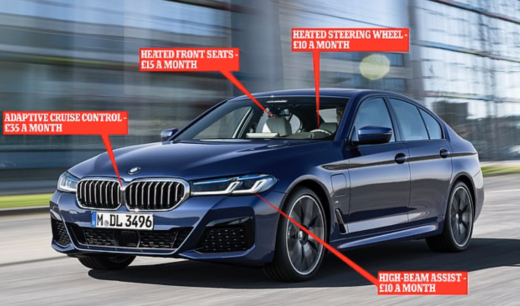
BMW’s heated seat subscription controversy may have faded, but the company has not abandoned its broader features-as-a-service strategy. As electric vehicles reduce traditional maintenance revenue, automakers are increasingly turning to software-based upgrades sold after purchase. BMW says it remains fully committed to its ConnectedDrive platform, allowing customers to add digital features retroactively, sometimes via subscriptions. Tesla has followed a similar path, recently paywalling features like Full Self-Driving, though it still offers some one-time upgrades. BMW argues customers are already comfortable with recurring fees, especially for data-based services.
Nvidia and OpenAI’s $100 billion AI chip plan quietly loses momentum
Nvidia and OpenAI’s headline-grabbing plan for a potential $100 billion AI infrastructure investment is showing signs of strain. Five months after announcing a nonbinding letter of intent, no deal has closed, and Nvidia CEO Jensen Huang now says the figure was never a commitment. Reuters reports OpenAI has been exploring alternatives to Nvidia chips amid concerns over inference performance, particularly for tools like Codex. While both companies publicly downplayed tensions, OpenAI has since partnered with Cerebras, AMD, and Broadcom to diversify its chip supply.