












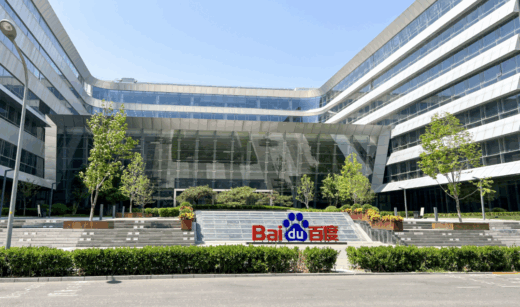
Baidu Launches Large-Scale Layoffs as AI Competition Intensifies and Ad Revenue Falls
Baidu has begun sweeping layoffs across multiple business units as it faces mounting pressure from falling advertising revenue and fierce AI competition, sources told Reuters. Some teams may see cuts of up to 40%, with the companywide reduction perceived internally as large-scale. While Baidu’s mobile ecosystem group will take the hardest hit, roles in AI and cloud computing will mostly be protected as the firm reallocates resources toward AI. Despite launching China’s first ChatGPT-style model in 2023, Baidu’s Ernie has lagged behind stronger rivals like Alibaba and DeepSeek.
DeepSeek Releases First Open-Source AI to Achieve Gold-Medal Performance on the IMO
DeepSeek has unveiled Math-V2, the world’s first open-source model to reach gold medal–level performance on the International Mathematical Olympiad (IMO), long considered the toughest benchmark for AI reasoning. Unlike typical models that output answers, IMO-level systems must show full reasoning steps—something only about 8% of human contestants achieve. Math-V2, now freely available on Hugging Face and GitHub under a permissive license. DeepSeek says the model also earned gold-level scores on China’s 2024 Mathematical Olympiad, significantly lowering barriers for global developers working on advanced math-reasoning AI.

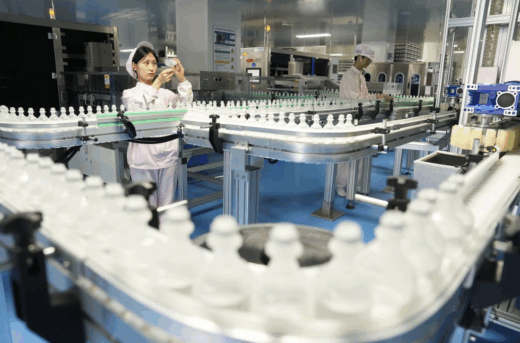
China Elevates Bio-Manufacturing as a Core Growth Engine in Its Next Five-Year Plan
China is positioning bio-manufacturing as a national strategic priority—on par with EVs and semiconductors—as it seeks technological self-reliance and new economic engines. The Ministry of Industry and Information Technology has designated 43 companies and research institutes as pilot-scale platforms spanning biopharmaceuticals, enzymes, food additives, and cosmetics. Analysts say Beijing aims to build a full biotech ecosystem by upgrading manufacturing lines, expanding production capacity, and strengthening clinical management.
U.S. Black Friday Online Sales Hit Record $11.8 Billion as AI Shapes Holiday Shopping
American consumers spent a record $11.8 billion online this Black Friday, up from $10.8 billion last year, according to Adobe Analytics, which tracks over a trillion retail visits. Spending peaked between 10 a.m. and 2 p.m. at $12.5 million per minute. Adobe projects Cyber Monday will reach $14.2 billion, reinforcing Black Friday’s shift into a primarily e-commerce event. Salesforce reported $79 billion in global Black Friday sales, though rising prices—up 7% on average—may explain much of the growth as order volumes dipped 1%. Both firms highlight AI’s growing influence, with Salesforce estimating AI shaped $22 billion in sales.

MIT’s Iceberg Index Shows AI Could Already Replace 11.7% of U.S. Jobs
A new MIT study using the Iceberg Index finds that current AI systems could already replace 11.7% of U.S. jobs, representing $1.2 trillion in wages across finance, HR, logistics, healthcare, and office administration. By modeling 151 million workers as skill-based agents across 923 occupations and 3,000 counties, the index reveals far deeper exposure than headline tech layoffs suggest. States like Tennessee, Utah, and North Carolina are already using Iceberg to test workforce and training policies. The tool isn’t forecasting exact job losses but offering policymakers a “digital twin” of the labor market to prepare for AI-driven disruption.
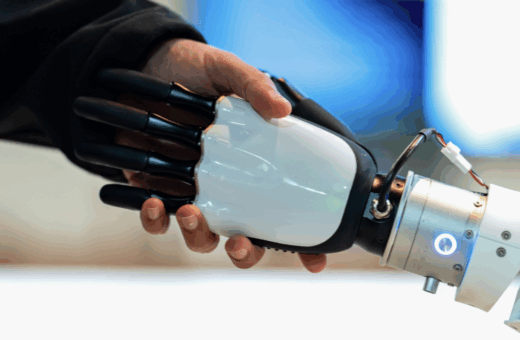
AI Pioneer Geoffrey Hinton Warns of Mass Job Loss, AGI Risks, and Militarized AI
Geoffrey Hinton, often called a “godfather of AI,” delivered stark warnings in a public discussion with Senator Bernie Sanders, arguing that AI’s rapid rise will eliminate jobs without creating new ones. If AI becomes as smart as humans, he said, “any job they might do can be done by AI,” leaving workers without alternatives. Hinton has long expressed regret over his role in developing the technology, now predicting massive unemployment, economic instability, and even existential risk. He also criticized tech billionaires for ignoring the economic fallout and warned that AI-powered robots could make military interventions easier by removing human casualties.
Americans Are Keeping Devices Longer — and It’s Quietly Dragging Down Productivity
U.S. consumers and businesses are holding onto aging devices longer than ever, with the average smartphone lifespan now 29 months, up from 22 months in 2016. While individuals save money, widespread delays in upgrading create a growing productivity drag, especially in companies relying on outdated hardware that can’t handle modern workloads or faster network speeds. A Federal Reserve study finds that each additional year businesses delay equipment upgrades cuts productivity by one-third of a percent and helps explain global productivity gaps. Experts argue that repairability, modular design, and better support for refurbished devices could ease costs while boosting efficiency. Yet familiarity, budget constraints, and rapid tech turnover keep many clinging to old tech.