












China’s Clean Tech Dominance Is Reshaping the Global Climate Fight
China’s rapid advances in clean technologies like solar power, wind energy, and electric vehicles are shifting global climate action away from diplomacy and toward cost-driven technological change. Analysts say China now has the manufacturing capacity to supply enough solar panels for the world to meet net-zero targets, making clean energy cheaper and more accessible, especially for developing countries. As emerging markets adopt Chinese clean tech at scale, fossil fuel–dependent nations like the U.S. risk falling behind.

SenseTime Enters Embodied AI With Open-Source World Model and Robot Dogs
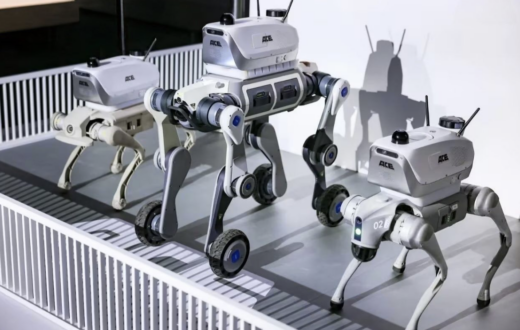
Chinese AI company SenseTime has launched its first major push into embodied intelligence by open-sourcing a “world model” and unveiling robotic dogs through its new venture, Ace Robotics. The company released Kairos 3.0, an open-source model designed to simulate real-world physical laws, alongside a developer platform called KaiWu. SenseTime says the model can serve as a “smart brain” for robots, enabling more advanced interaction with physical environments. The move aligns SenseTime with global players like Google DeepMind and Tencent exploring spatial intelligence.
China’s EUV Breakthrough Could Reshape the Global Chip Race
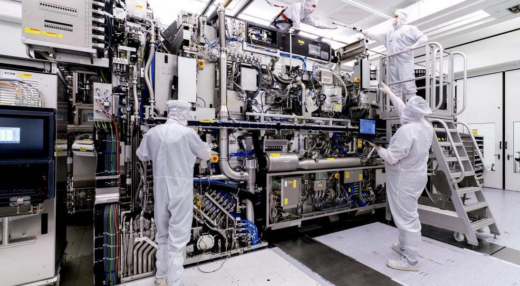
China is reportedly developing a prototype extreme ultraviolet (EUV) lithography machine, a critical technology for manufacturing advanced semiconductors below 3 nanometres. Built by former ASML engineers through reverse-engineering, the prototype signals Beijing’s push to overcome US-led export controls and achieve chip self-sufficiency. While analysts warn that matching ASML’s highly complex, production-ready EUV systems could take years—possibly until 2030—the effort highlights China’s all-in, security-driven strategy. If successful, EUV mastery would significantly boost China’s geopolitical leverage.
Microsoft Scales Back AI Sales Targets as Copilot Struggles to Gain Traction
Microsoft has reportedly cut sales targets for its agentic AI software by as much as 50% after failing to attract sufficient customer interest, highlighting weaker-than-expected demand. Despite being an early AI mover through its investment in OpenAI, Microsoft’s Copilot is lagging behind competitors like ChatGPT and Google Gemini in both market share and perceived usefulness. Independent tests have shown AI agents frequently fail at complex tasks, limiting their value as workforce replacements. While Microsoft denies lowering overall AI sales quotas, market data suggests momentum has stalled. With ChatGPT dominating usage and Gemini rapidly closing the gap, Copilot risks becoming a marginal player.

Roomba Maker iRobot Files for Bankruptcy
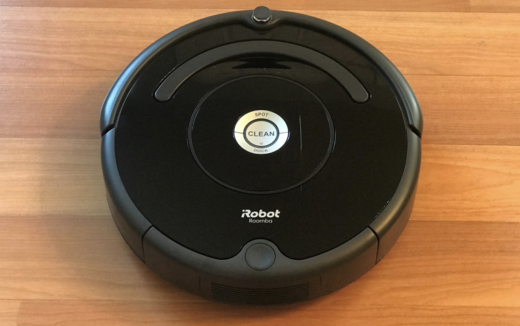
iRobot, the maker of Roomba robotic vacuums, has filed for Chapter 11 bankruptcy and will go private after being acquired by its primary manufacturer, Picea Robotics. The move follows mounting pressure from cheaper Chinese competitors, rising costs from new U.S. tariffs, and heavy debt tied to a failed $1.4 billion Amazon acquisition. Although iRobot generated $682 million in revenue in 2024, profitability eroded as prices fell and costs rose, including a 46% tariff on Vietnam-made products. Under the restructuring plan, Picea will take full ownership, cancel $264 million in debt, and continue operations without disrupting customers.
California Judge Rules Tesla Misled Customers on Autopilot
A California administrative law judge ruled that Tesla engaged in deceptive marketing by overstating the capabilities of its Autopilot and Full Self-Driving systems. The decision supports the DMV’s claim that Tesla gave consumers a false impression of vehicle autonomy. As a penalty, the judge approved a 30-day suspension of Tesla’s sales and manufacturing licenses in California, though enforcement is stayed for 60 days. Tesla must either change the “Autopilot” name or deliver truly autonomous software. Tesla has indicated it will not comply.
Mozilla to Turn Firefox Into an Optional AI Browser
Mozilla has announced that under new CEO Anthony Enzor-DeMeo, Firefox will evolve into an AI-powered browser over the next three years, with all AI features remaining optional and easy to disable. Enzor-DeMeo emphasized user agency, privacy, and transparency as core principles. Despite these assurances, the announcement sparked strong backlash online, with many Firefox users saying they chose the browser specifically to avoid AI-heavy experiences seen in Chrome, Edge, and others. Critics argue Mozilla is out of touch with its user base and should focus on non-AI improvements instead.