Rising costs, changing market conditions, and the demand for skilled labor drive hospitality businesses to leverage innovative IT solutions for efficiency and competitive advantage.
Finance
ATP enhances operational efficiency and improves customer experience by providing financial institutions with a wide range of solutions, from payment systems to digital banking.
Retail
ATP provides the retail sector with innovative solutions such as ERP, CRM, autonomous robots, and big data analytics, enabling businesses to gain speed, flexibility, and a competitive advantage.
Energy
ATP provides the energy sector with a specialized digital marketplace and payment solutions, offering businesses supplier access, strategic advantages, and operational efficiency.
Logistics
ATP enhances logistics management with integration and automation, reducing transportation costs, shortening delivery times, and increasing reliability in the supply chain.
Moonshot AI Valuation Surges to $30 Billion as Kimi Revenue Doubles
Moonshot AI, creator of the Kimi assistant, has launched a new fundraising round at a $30 billion pre-money valuation—nearly six times its $4.3 billion valuation from December 2025. The surge follows rapid revenue growth: annual recurring revenue surpassed $100 million in March after launching the K2.5 model, then doubled to over $200 million by April. The Chinese AI company had reportedly been closing a $2 billion round at a $20 billion-plus valuation just last month, signaling intense investor appetite for competitive large language models.
Huawei Launches HarmonyOS 7 with 2,000 AI Agents, Surpassing Apple in China
Huawei unveiled HarmonyOS 7, declaring the “agent era” has arrived with an AI ecosystem of 2,000 specialized agents capable of autonomous complex tasks—from crafting marathon training plans to cross-device file retrieval. The upgrade delivers 30-40% better performance than rivals, with Chairman Richard Yu promising annual 10-15% improvements. The timing is strategic as Apple’s iOS 27 AI features remain blocked in mainland China by regulations, while HarmonyOS has already captured 19% of China’s smartphone market versus iOS’s 17%. Huawei also announced it will open-source its OpenPangu 2.0 language model later this month, including a 505-billion-parameter version.
SAIC Motor to Build First European EV Plant in Spain, Creating 2,300 Jobs
Chinese automaker SAIC Motor is expanding into Europe with a €200 million electric vehicle manufacturing plant in Spain’s Galicia region. Located in Ferrol, the facility will produce 120,000 vehicles annually and generate over 2,300 local jobs, with construction starting in 2027 and operations beginning by late 2028. The project includes a new industrial zone near the port to support logistics and assembly.
College Students Can't Read 20 Pages Without Losing Track
A college literature instructor reveals that not a single student could finish a 20-page article—a task he completed easily a decade ago. The confession exposes a generational collapse in reading ability: 12th grade scores hit their lowest since 1992, and 70% of fourth graders read below proficiency. Students blame losing focus, but research points to deeper causes. MIT studies show ChatGPT users exhibit reduced brain activity in creativity regions, with 83% unable to recall their own essays afterward. Even nearby smartphones measurably impair cognition.
Judge Cancels Trial, Disqualifies All Lawyers After Both Sides Caught Using AI Hallucinations
A federal judge in Mississippi delivered a blistering rebuke to the legal profession after discovering lawyers on both sides of a contract dispute used AI tools that cited fake, hallucinated cases. Senior Judge Sharion Aycock called it a “prime example” of rubber-stamping unverified AI output, disqualifying all four attorneys, canceling the trial, and imposing fines up to $3,500. Two lawyers were barred from her court for two years. The case—described as a “comedy of AI errors”—effectively had clients paying for chatbots to argue against each other.
First FDA-Approved Reverse-Aging Drug Trial Launches
Boston’s Life Biosciences has begun the first FDA-approved human trial of a cellular reprogramming drug aimed at reversing aging. The ER-100 treatment was injected into a glaucoma patient’s eye to rejuvenate optic nerve cells and potentially restore vision, with future hopes of targeting organs like the liver and brain. Early mouse research showed cancer risks, and Harvard geneticist David Sinclair— the company’s co-founder—has a track record of overhyping anti-aging claims. The trial marks the field’s most concrete advance yet, but a youth pill remains distant.
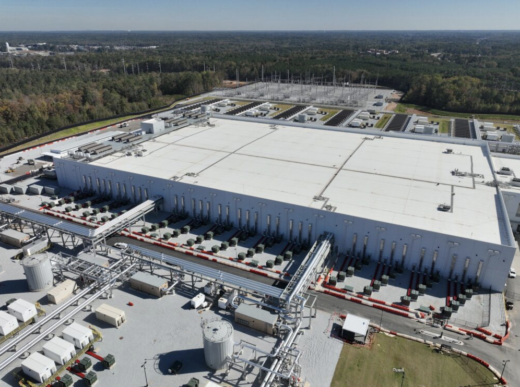
Data Centers Drain 264 Billion Gallons as Drought Scorches 63% of America
The AI boom is colliding with a devastating national drought, sparking fierce debate over water allocation. AI data centers consumed nearly 1 trillion liters (264 billion gallons) of water in 2025—equivalent to 1.8 million Americans’ annual usage, or the entire global bottled water industry. Meanwhile, 63% of the U.S. faces drought conditions, with reservoirs shrinking and states like Tennessee experiencing fourth-lowest runoff in 152 years. Tech giants including Microsoft, Google, and Amazon are aggressively expanding infrastructure, while communities push back against rising utility costs and strained resources.
Geri bildiriminiz için teşekkür ederiz. Talebiniz, gizlilik ilkeleri çerçevesinde Komite’miz tarafından hassasiyetle değerlendirilecek olup, gerekli görülmesi halinde paylaştığınız iletişim adresinize geri dönüş sağlanacaktır.















 English
 By
By